
The arcade industry is undergoing a remarkable transformation, and at the center of this evolution is the skill game machine. What was once defined by simple joysticks and buttons has evolved into a sophisticated ecosystem of interactive, skill-based entertainment, with modern skill game machines leading the charge through innovative screen designs that fundamentally change how players engage with games.
Industry data reveals that consumer participation in skill-based gaming has surged by over 45% in the past five years, with the skill game machine segment capturing an increasingly larger share of arcade revenue. This explosive growth is driven by technological advancements in display technology – from curved and dual screens to vertical and S-shaped designs – that are transforming the skill game machine from a simple entertainment device into an immersive experience platform.
At the heart of this revolution lies a fundamental shift in how players interact with games. Today’s skill game machine offers intuitive touch controls, stunning visual fidelity, and multi-screen configurations that create deeper engagement than ever before. As arcade gaming technology continues to evolve, the skill game machine stands as the perfect example of how thoughtful design and cutting-edge display technology can elevate commercial entertainment to new heights.
1: The Evolution of Skill Game Machines
The journey from traditional arcade cabinets to modern skill game machines reflects broader technological and cultural shifts. Early arcade games like the 1963 Bally “Bounty” featured simple mechanical screens with limited interactivity. Players engaged with basic mechanics – shooting balls into numbered holes or sliding metal screens across static displays.
The real breakthrough came decades later. Ralph Baer, often called the “grandfather of video games,” envisioned electronic gaming devices as early as the 1950s. His “Brown Box” prototype, later licensed as the Magnavox Odyssey, introduced the concept of interactive television gaming that would eventually influence arcade design. These early innovations laid the groundwork for the sophisticated touchscreen experiences we see today.
The transition from luck-based to skill-based gaming represents a fundamental paradigm shift. Modern players demand games where their abilities, strategy, and precision determine outcomes – not just chance. This shift has accelerated the adoption of technologies that enable more interactive and engaging gameplay.
Modern skill game machines now feature advanced capacitive touch technology with chemical-resistant glass capable of withstanding 50 million touches. This durability is essential for commercial environments where machines operate 16-24 hours daily. Touchscreen integration has also enabled more intuitive gameplay. Unlike traditional button controls, touchscreens allow natural gestures – swiping, tapping, pinching – that feel instinctive to players of all ages. This accessibility is crucial for attracting diverse audiences, from children to adults.
2: Curved Touch Screens for Immersive Gameplay Arcade Gaming Technology
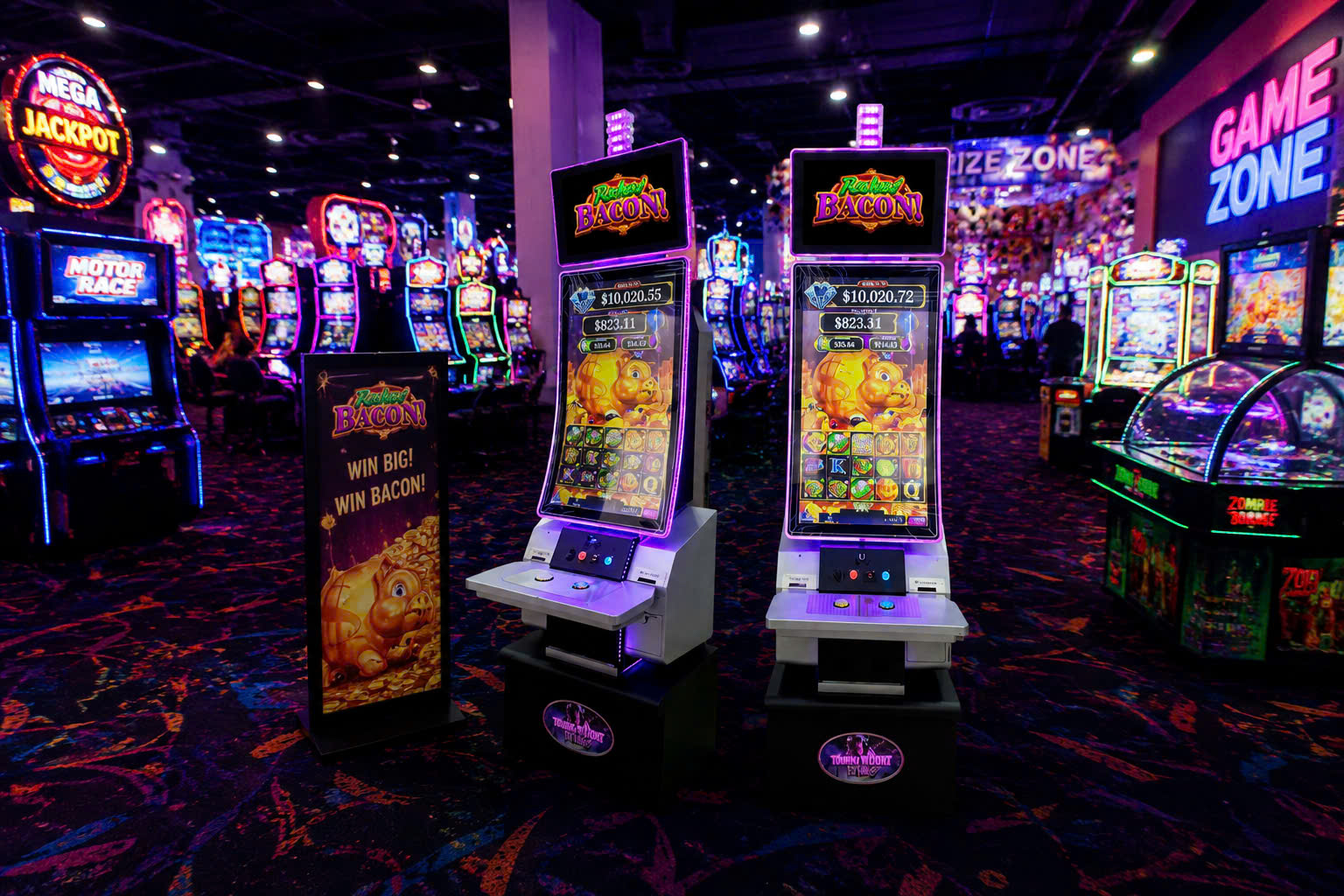
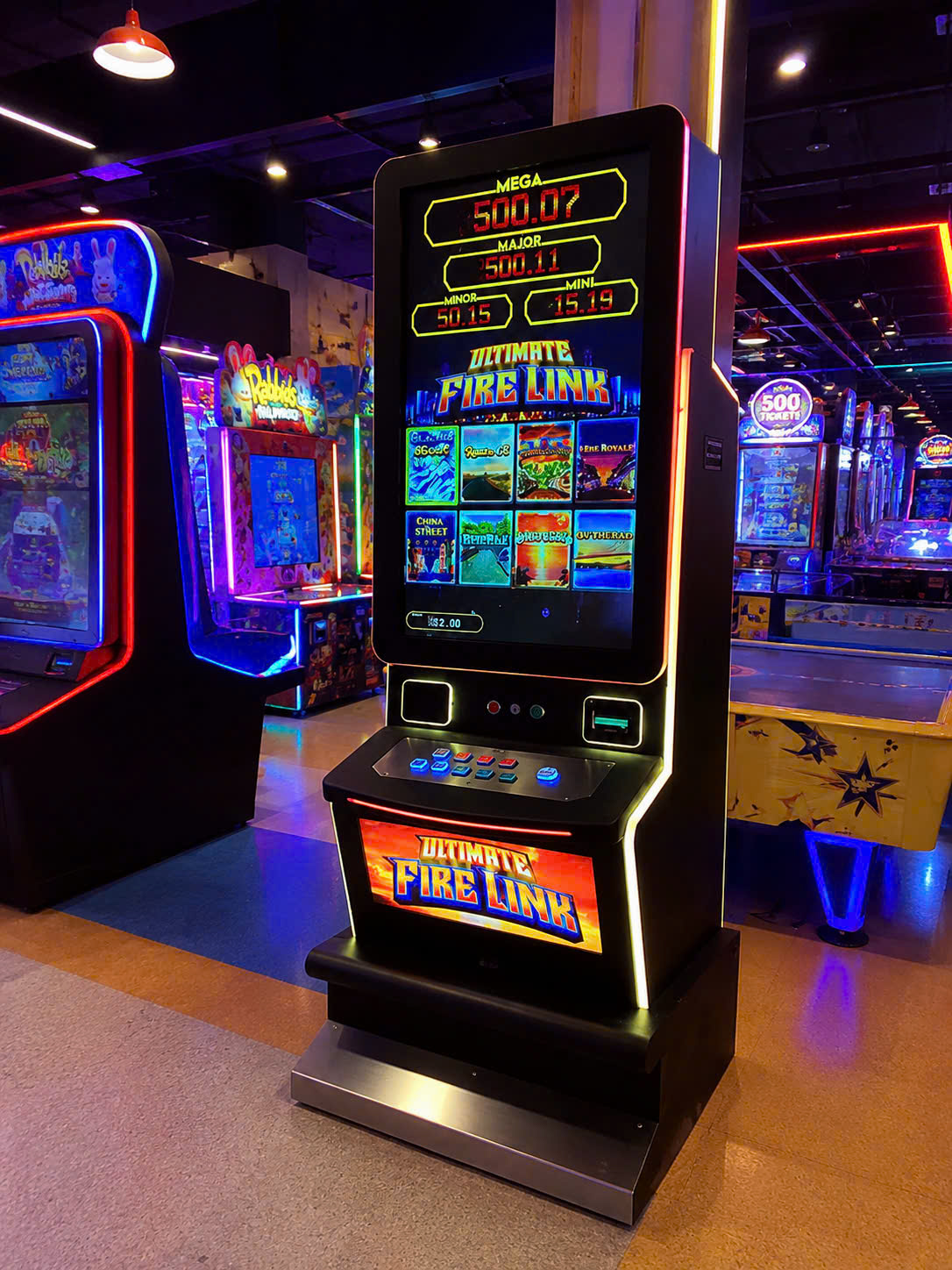
One of the most significant developments in skill game machine design is the adoption of curved touchscreens. The 43-inch curved display has become a standard in premium arcade machines, offering a 20% wider viewing angle than flat-screen alternatives.
What makes curved screens transformative? They create a “bubble” effect that surrounds the player’s field of vision, eliminating peripheral distractions and creating genuine immersion. Players feel inside the game world rather than looking at a flat display. This is particularly impactful for skill-based games that require focus, precision, and quick reactions.
Research shows that curved screens can increase user playtime by up to 20% and improve customer retention rates by 23% compared to flat screens. The psychological impact is significant – players experience a deeper emotional connection to the game, which translates into longer sessions and higher revenue per machine.
The popularity of curved displays extends beyond arcades. High-end casinos, premium family entertainment centers, and luxury hotel lounges are rapidly replacing flat screens with curved alternatives, recognizing their superior ability to attract and retain customers.
>>>See more: Ghế massage giá bao nhiêu? Bảng báo giá ghế massage mới nhất
3: Dual and Multi-Screen Machines for Interactive Entertainment
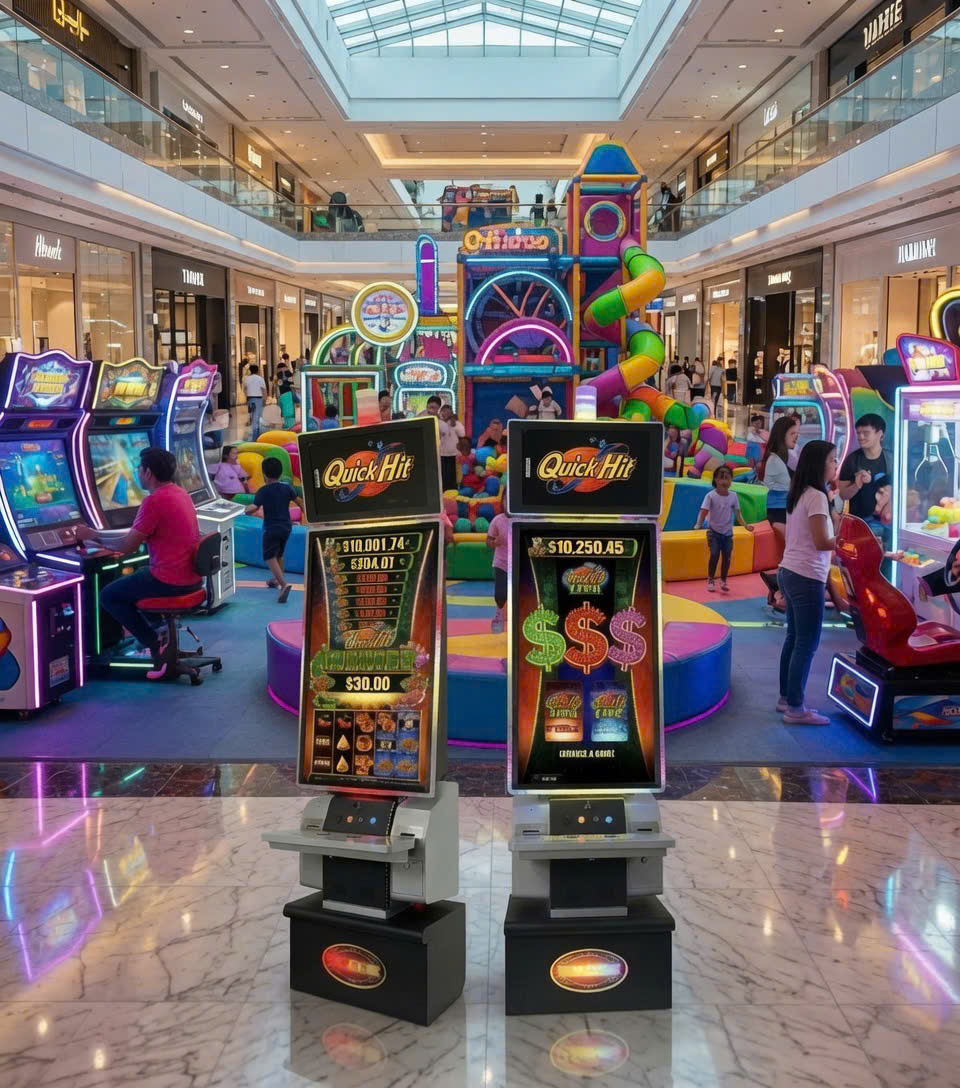
The evolution from single to dual and multi-screen configurations represents another leap forward in arcade gaming technology. Dual-screen machines typically feature a large main display (43 inches) combined with a smaller secondary screen (23.6 inches), serving different functions.
Multi-screen designs enhance gameplay in several ways:
Expanded Information Display: Secondary screens can show scoring, instructions, or advertisements without cluttering the main gameplay area.
Competitive Play: Multiple screens enable head-to-head competition without crowding. For example, dual 14-inch screens allow two players to battle simultaneously without sharing screen space.
Dual-Screen Home Consoles: Products like the 14-inch dual-screen portable arcade machine with 20,000+ built-in games demonstrate how dual-screen design is moving beyond commercial arcades into home entertainment.
Some premium arcade machines feature screens up to 110 inches, creating massive, immersive experiences for games like Wizard of Oz or Minecraft Dungeons Arcade. These large-scale installations are particularly effective in family entertainment centers and major amusement parks where the wow factor is essential for attracting crowds.

4: Vertical, Horizontal, and S-Shape Displays for Different Venues
Different venues require different display orientations, and modern skill game machines are designed to accommodate this diversity. Each format serves specific business needs and spatial constraints.
Vertical Displays
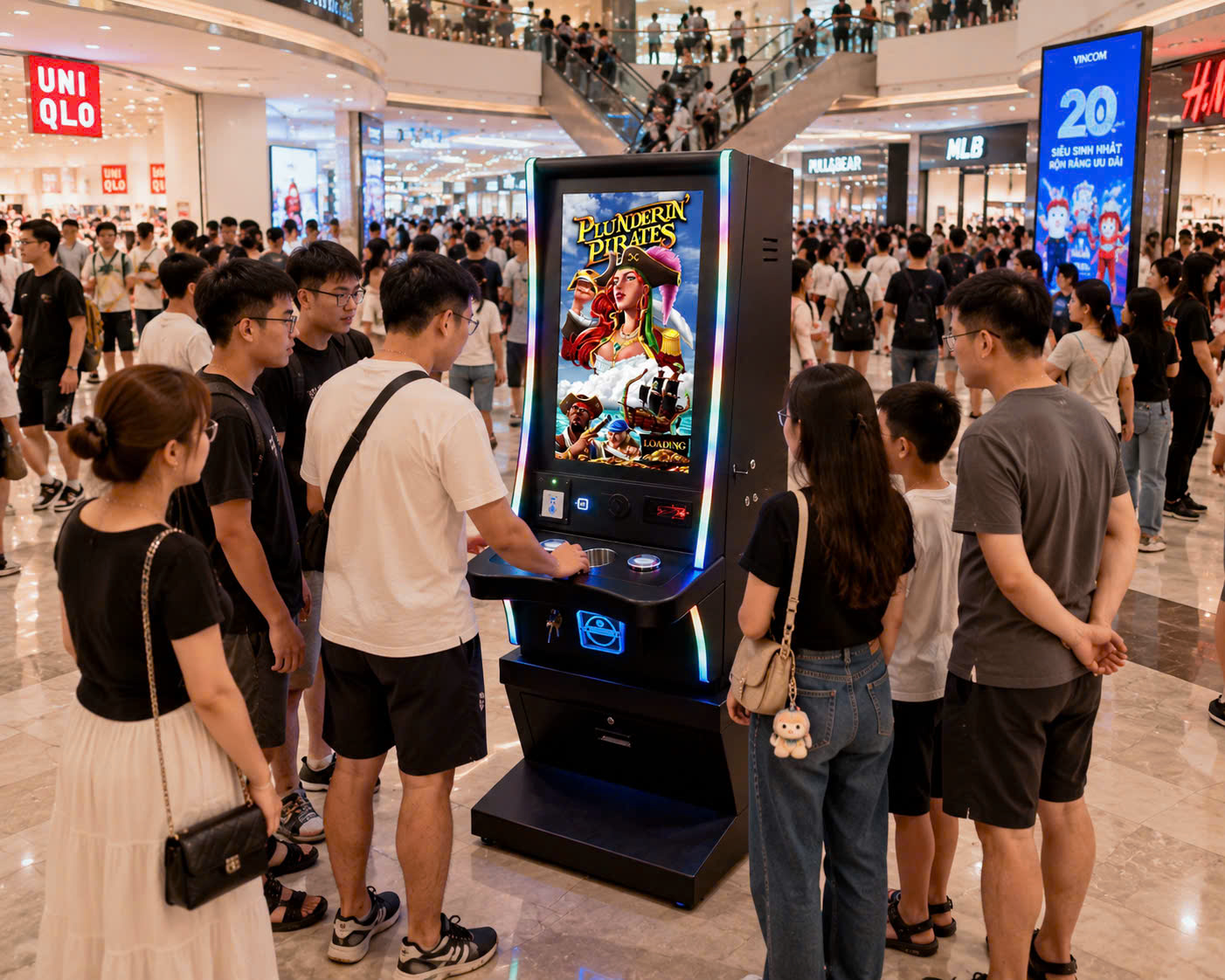
The vertical orientation is a space-saving solution, reducing floor footprint by 30-40% compared to horizontal machines. This makes it ideal for:
Shopping malls and convenience stores
Tight spaces like store aisles or waiting areas
Game genres that suit portrait orientation (puzzle games, certain skill challenges)
Vertical machines are particularly popular in retail environments where floor space is at a premium. Their tall, slender profile allows operators to maximize revenue per square foot while maintaining a strong visual presence.

Horizontal Displays Arcade Gaming Technology
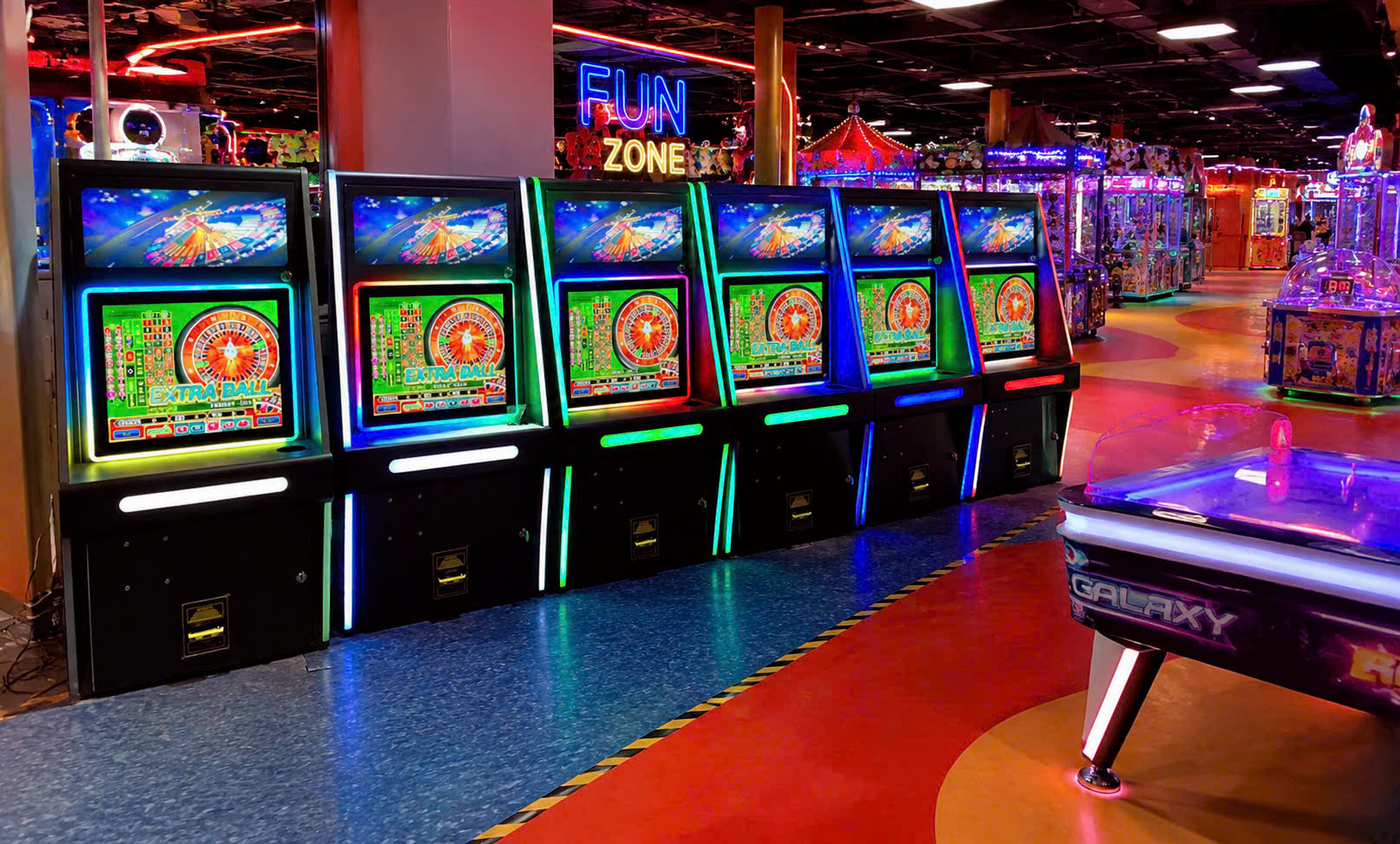
Horizontal screens work best for:
Racing games and simulations
Wide-action games with multiplayer modes
Group play areas and tournaments
This format is favored in dedicated gaming zones where space is more generous and group dynamics are a key part of the experience. The wide aspect ratio creates a cinematic feel that draws players into the action.
S-Shaped or Curved Displays
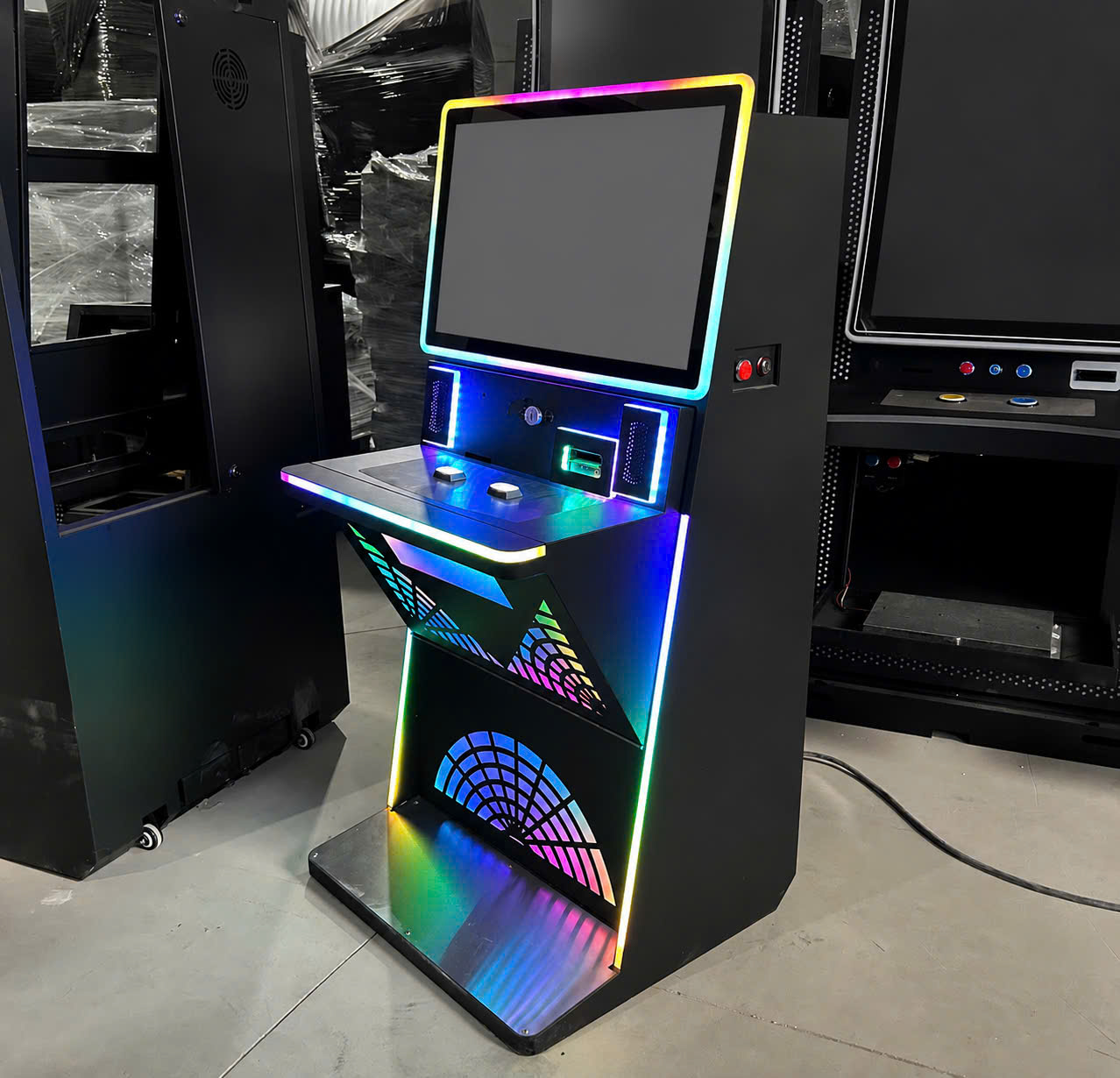
The distinctive S-shape creates a visual landmark in any venue. These machines:
Serve as “technological art pieces” in premium entertainment spaces
Optimize playing space for multiple players
Create a modern, high-end aesthetic that attracts attention
S-shaped machines are often used as anchor attractions in high-traffic areas, drawing customers deeper into the venue. Their unique appearance generates curiosity and encourages spontaneous play.

Choosing the Right Format Arcade Gaming Technology
For operators, selecting the right display format involves balancing several factors:
| Venue Type | Recommended Display | Rationale |
|---|---|---|
| Shopping Mall Kiosk | Vertical | Space-efficient, visible from distance |
| Game Center | Horizontal + Curved | Wide experience, premium immersion |
| Family Entertainment Center | S-Shape + Dual Screen | Anchor attraction, high visual impact |
| Hotel Lounge | Curved | Premium aesthetic, guest engagement |
| Cinema Lobby | Vertical | High traffic, compact Printer |
5: The Future of Skill Game Machine Design
Several trends are shaping the future of skill game machines, driven by technological convergence and evolving consumer expectations. The next generation of these machines promises even more immersive and personalized experiences.
AI-Driven Personalization
Advanced skill game machines are incorporating AI to adapt difficulty levels to individual players. Premium models already offer “AI-driven challenges” that adjust to player skill levels, ensuring engaging experiences without frustration. This personalization keeps players in the “flow zone” – challenged enough to stay interested but not overwhelmed to the point of giving up.
8K Resolution and Premium Visuals
The shift toward 8K Ultra HD displays represents the next frontier. Premium machines featuring 8K resolution deliver ultra-sharp visuals that create truly lifelike experiences. As display costs decrease, this premium quality will become more accessible to mainstream venues, raising the bar for visual expectations across the industry.
Hybrid Physical-Digital Play
Recent innovations include physical controls combined with digital feedback – force feedback guns with functioning scopes, or pinball-style plungers launching balls at digital targets. This blending of physical skill with digital response creates uniquely satisfying gameplay that bridges the gap between traditional arcade mechanics and modern interactive entertainment.
Connectivity and Social Play
Cloud-based management allows operators to track performance, update content remotely, and analyze player data. Multiplayer connectivity, global leaderboards, and social sharing features extend the arcade experience beyond the physical machine. The ability to link multiple cabinets for multiplayer games demonstrates this trend toward connected, community-driven experiences.
The Long-Term Outlook Arcade Gaming Technology
Experts predict that within the next decade, skill-based games will become standard in arcades, amusement parks, and family entertainment centers. Key drivers include evolving regulations favoring skill over chance, technological convergence, and consumer demand for fairer, more engaging gaming experiences.
As one industry analyst noted: “The future of arcade gaming lies in immersive, skill-driven experiences that harness modern web technologies and gamification principles to keep players engaged.” This future is already arriving – one curved touchscreen at a time.
>>>See more: 27-Inch Touchscreen Arcade Machine – The Perfect Compact Solution for Commercial Gaming